
A 100-unit affordable housing project in Live Oak tests the limits of local control as state mandates turn development approvals into an administrative checklist.
November 6, 2026 | The Nub
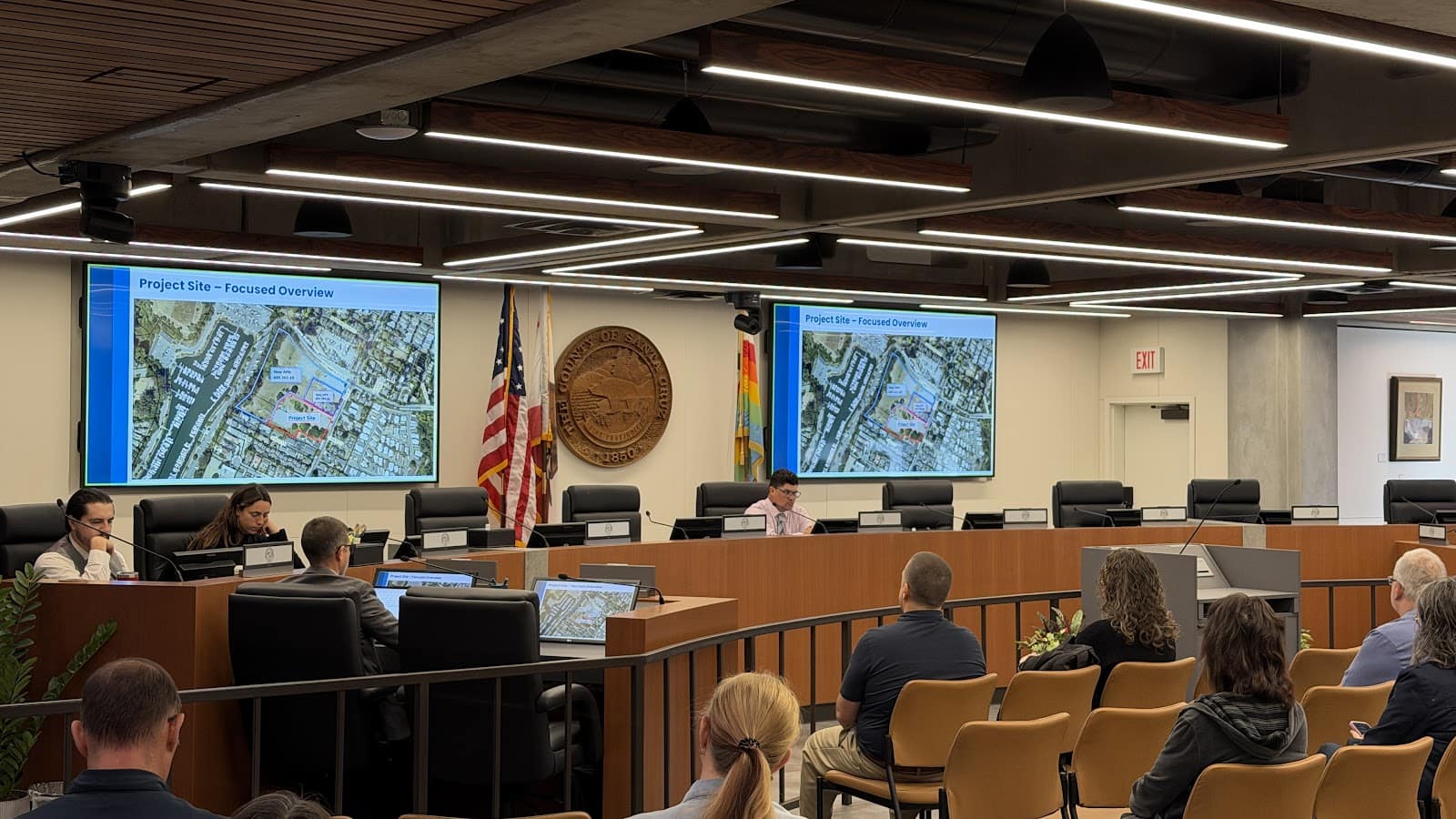
A proposed 100-unit affordable housing development at 7th Avenue and Brommer Street in Live Oak appeared before the Santa Cruz County Zoning Administrator on Friday, November 6.
But if local residents showed up expecting a traditional debate over whether the project should be built, the official meeting agenda came with a stark reality check: this hearing wasn’t a referendum.
Instead, the project qualified for ministerial approval, meaning the County’s authority to approve or deny the proposal was strictly limited by predetermined legal standards rather than local discretion.
Understanding how a major development clears local hurdles without a traditional vote requires looking at how state housing mandates, county zoning overlays, and coastal rules intersect.
The State Mandate: Housing by Right
Under California law, local governments are required to clear the path for housing to meet state-mandated regional targets.
On designated sites, state rules strip away the traditional discretionary gatekeeping, such as conditional use permits or lengthy environmental reviews, that historically allowed communities to debate, delay, or block projects.
Instead, qualifying developments are approved “by right.” Rather than asking whether housing should be permitted on a given parcel, the review process focuses strictly on whether the proposal complies with objective, pre-established standards.
The County’s Response: The Ministerial Overlay
To implement these state housing requirements, Santa Cruz County established a special zoning overlay designed to streamline qualifying projects.
For properties carrying this designation, the approval process shifts from a political decision to an administrative review. As long as a project meets objective criteria, such as including at least 20% deed-restricted lower-income housing, passing design review, and meeting development standards, the County is legally obligated to move it forward.
The 7th Avenue and Brommer site falls squarely under this framework, guiding developer Community HousingWorks through a streamlined review process that began with preliminary applications back in late 2025.
The Coastal Catch & The Appeal Distinction
Because the property sits within the Coastal Zone, the project still requires a Coastal Development Permit, adding a distinct layer of environmental and land-use oversight.
Under County Code § 13.10.497(B), ministerial projects inside the Coastal Zone remain subject to coastal regulations, and depending on a property’s exact location, such as proximity to shoreline features or appealable zones, certain Coastal Development Permits can be appealed to the California Coastal Commission.
However, the meeting notices introduce a critical procedural split. The County’s November 6 agenda designated the Zoning Administrator hearing itself as nondiscretionary and locally nonappealable, stating:
“This Zoning Administrator hearing is nondiscretionary and is thus not appealable.”
That label governs the local administrative track, meaning the decision cannot be appealed up to local bodies like the Planning Commission or Board of Supervisors. But whether the underlying Coastal Development Permit carries an appeal path to the state Coastal Commission is an entirely separate legal determination governed by the Coastal Act and specific site criteria. Conflating the two misses the underlying mechanics: local administrative discretion is locked down by ministerial rules, while state-level coastal appealability remains governed by its own distinct statutory framework.
A Public Hearing Without Discretionary Authority
This administrative reality creates a profound disconnect for the public. Residents were free to attend, comment, and submit evidence, but the administrator’s hands were legally tied. The hearing was not designed to weigh whether the neighborhood wanted the building, but whether the paperwork checked out.
The Bigger Picture
As California increasingly replaces local discretion with mandatory approvals, projects like the one at 7th Avenue and Brommer highlight a broader question facing communities across Santa Cruz County:
When state law dictates the outcome of major housing developments, what role actually remains for local government and public participation?
It’s a question that is only going to come up more often as the county’s housing landscape continues to evolve.
Ian Gibb | The Nub — Independent Journalism & Commentary